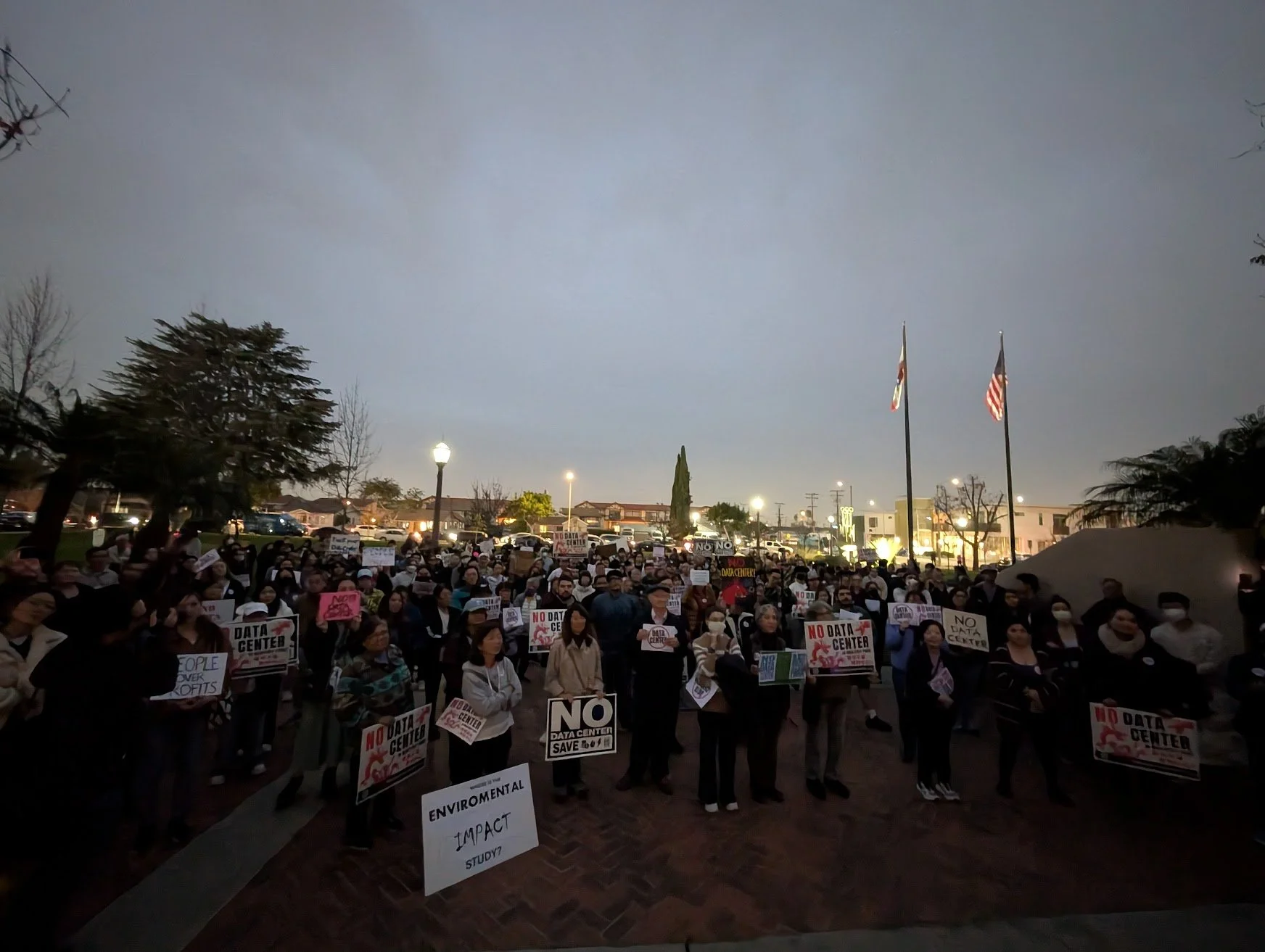
No Data Centers sgv coalition
The No Data Centers San Gabriel Valley Coalition is a community-led alliance working to protect the health, safety, and quality of life of San Gabriel Valley residents by preventing the development of data centers in our communities.
We organize residents, advocate for strong local policies, and hold decision-makers accountable to ensure that land use decisions prioritize environmental protection, public health, energy and water sustainability, and the well-being of our neighborhoods.
no data center in the sgv!
no data center in the sgv!
What are data centers?
Data centers are large facilities filled with computers and networking equipment that store, process, and distribute digital information. They are the physical infrastructure behind the internet and many everyday digital services.
Inside a data center are thousands of servers that run websites, apps, cloud storage, artificial intelligence systems, financial transactions, and other online services. Companies such as cloud providers, technology firms, and financial institutions use data centers to keep their systems running continuously and to store massive amounts of information.
Because the equipment runs 24 hours a day, data centers require significant supporting infrastructure. They consume large amounts of electricity to power servers and cooling systems that prevent the equipment from overheating. Many facilities also use substantial amounts of water for cooling. Data centers typically include backup power systems such as generators and battery storage to prevent outages.
Modern data centers can occupy very large buildings and are often located in industrial zones. While they are critical to digital infrastructure, they are also associated with high energy demand, noise from cooling equipment, heavy electrical infrastructure, and limited local employment once construction is completed.
For communities, the debate around data centers often centers on land use, environmental impacts, energy consumption, water use, and whether the facilities provide meaningful benefits to local residents.
Why should we care?
Data centers may seem invisible because they power the internet and cloud services we use every day, but the facilities themselves are large industrial buildings with significant local impacts. When built in or near residential communities, they can affect electricity demand, infrastructure, and land use across the region.
Large data centers require enormous amounts of electricity to power servers and cooling systems that operate 24 hours a day. This can place pressure on local power infrastructure and require major utility upgrades. Many facilities also use backup generators and cooling equipment that can generate constant noise and emissions.
Another concern is land use. Data centers occupy large parcels of land but typically create relatively few permanent jobs once they are built. Residents often question whether these facilities provide enough local benefit compared with other types of development such as housing, community spaces, or businesses that generate more economic activity.
For the San Gabriel Valley, the issue is also regional. Projects proposed in one city can impact neighboring communities through increased infrastructure demand, environmental effects, and changes to the local landscape. Because of this, many residents believe communities should have a say in whether large industrial data centers belong in densely populated areas like the SGV.
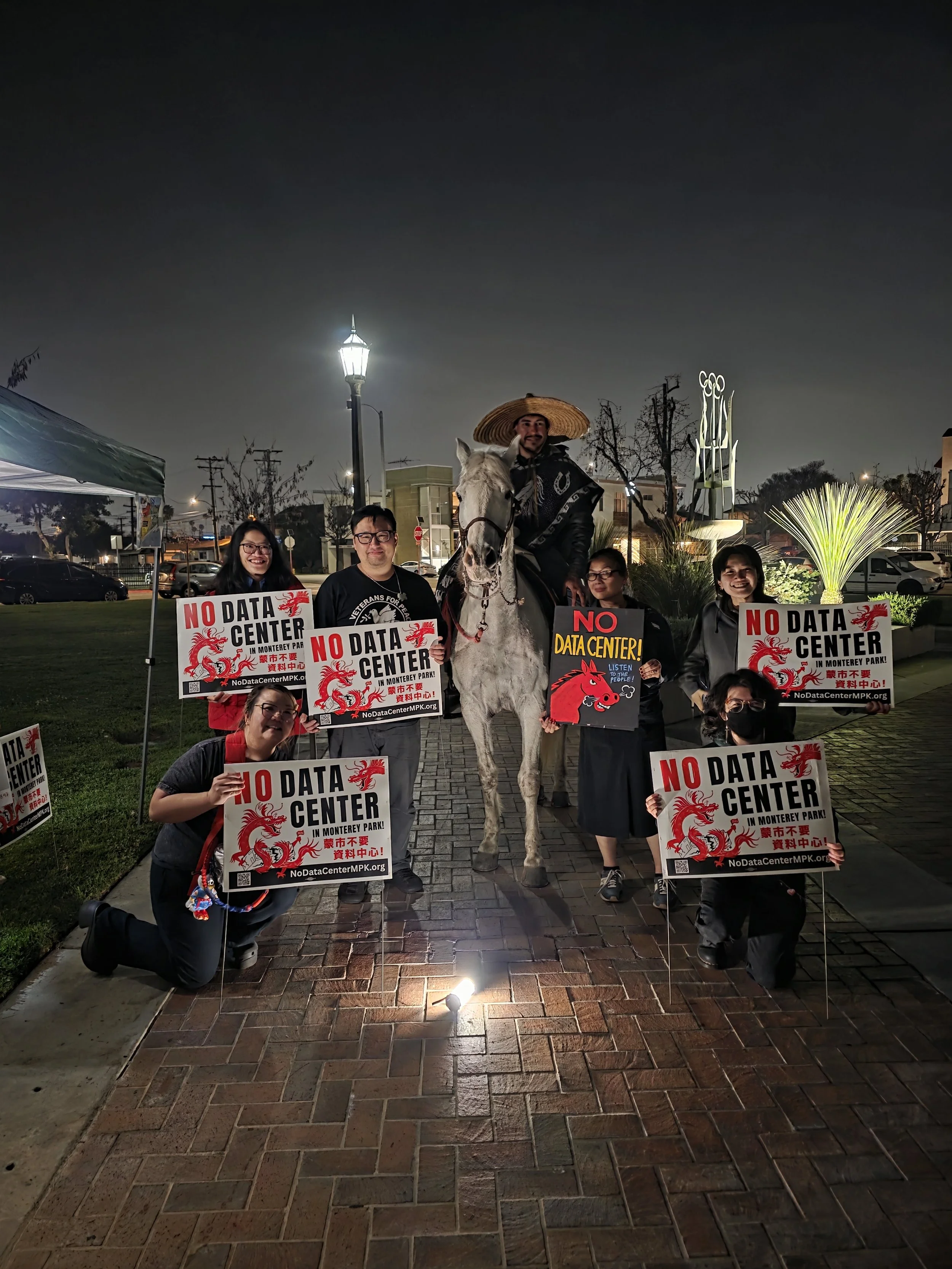
focus areas
Monterey Park
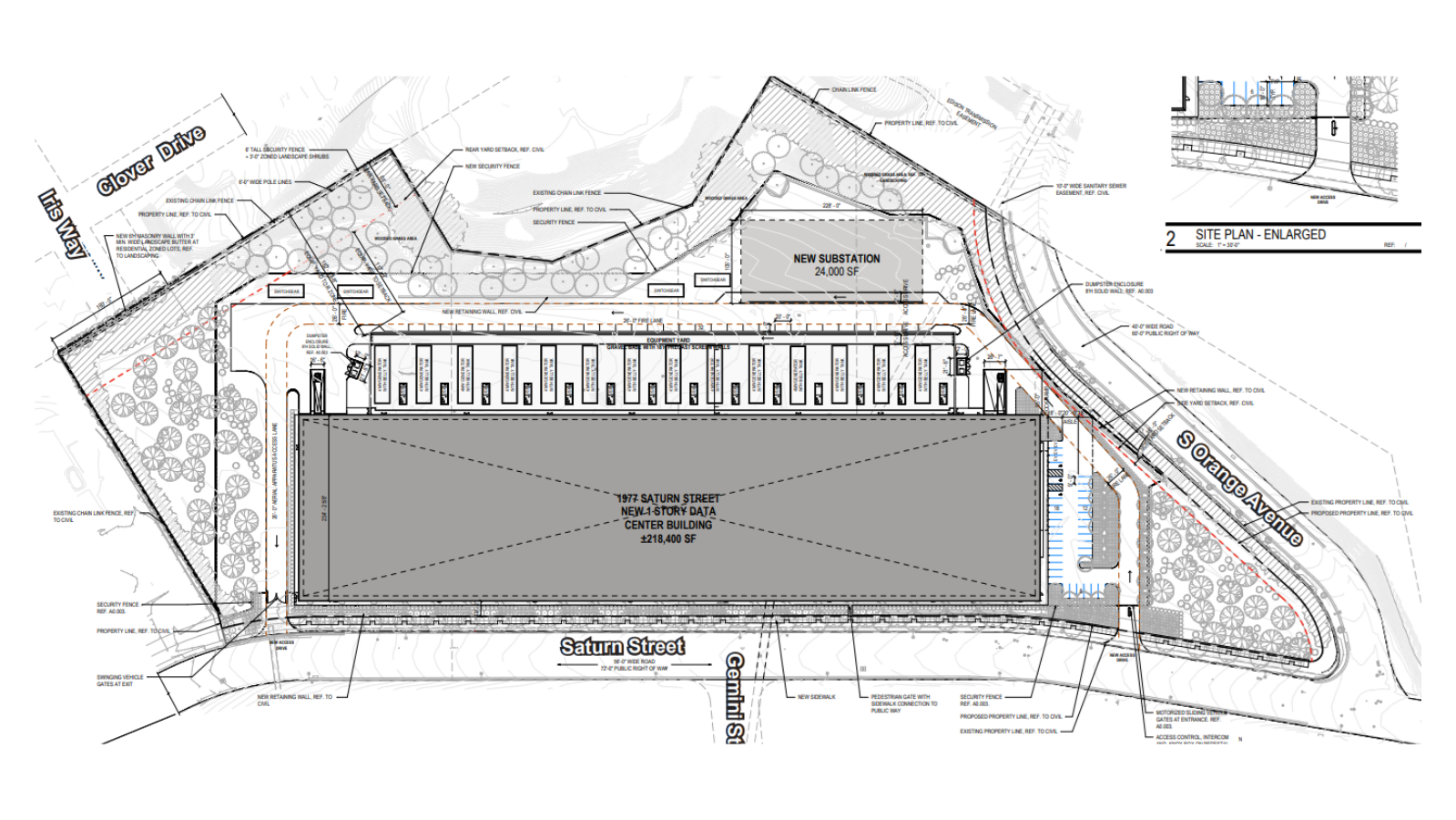
Monterey Park is currently facing a proposal to build a large industrial data center at 1977 Saturn Street. The project would replace an existing office complex with a facility filled with thousands of computer servers operating around the clock to support cloud computing and artificial intelligence systems.
Many residents are concerned about the scale of the project and its potential impacts, including increased electricity demand, noise from cooling equipment, backup generators, and limited local economic benefits. The proposal has also raised broader questions about whether large data centers are appropriate in dense residential communities like those in the San Gabriel Valley.
In response to strong public concern, Monterey Park voters will decide on June 2 whether to ban data centers citywide through a ballot measure. At the same time, the City Council is also working on an ordinance that could prohibit data centers in the city. Together, these actions represent two pathways being considered to protect the community from future data center development.
City of industry
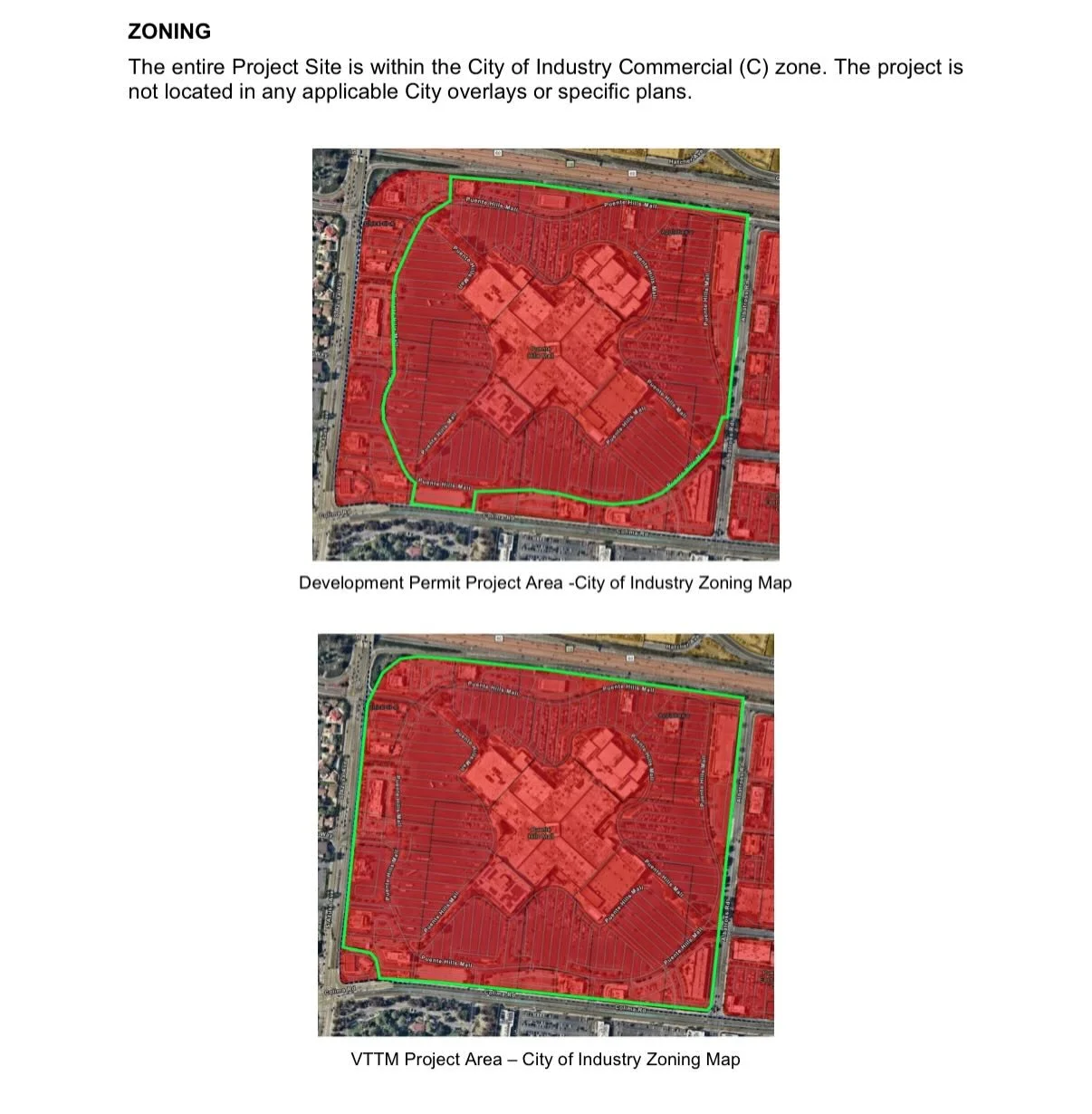
The City of Industry has recently approved zoning changes that allow large data center developments. While the city itself has a very small residential population, these decisions can have significant impacts on surrounding communities in the San Gabriel Valley.
Residents in neighboring cities are concerned that large data centers in the City of Industry could increase regional electricity demand, introduce noise and industrial infrastructure, and affect nearby neighborhoods that had little opportunity to weigh in on the decisions. The city has also faced criticism for limited public transparency, including not consistently livestreaming or publishing recordings of its meetings.
At minimum, three data centers and one Battery Energy Storage System are already being proposed:
• Puente Hills Mall
• A site off Grand Avenue near Diamond Bar
• Gale and Stimson across from the Glenelder residential tract
This is not about a single facility. It is about whether the City of Industry will continue approving water intensive data centers, high hazard Battery Energy Storage Systems, and heavy industrial uses, including the proposed Marici site at Gale and Stimson, without meaningful regional accountability.
A zoning amendment is a policy decision. Once adopted, it opens the door to repeated approvals.
Because the effects of large infrastructure projects do not stop at city boundaries, many residents believe regional planning and greater public accountability are needed when considering developments of this scale. If the City refuses to consider the public health, environmental, and cumulative impacts on surrounding communities, then it is time for a broader regional discussion about structural accountability and governance.
coalition members
SGV Progressive Action

avocado heights vaqueros